




Hardtail or full-suspension: which one suits you?
Hardtail or full-suspension — it's the question every mountain biker ends up asking. And the answer depends entirely on you. We break it down without the jargon, so you can figure out what suits you before you buy.

The question every mountain biker asks themselves.
You want to buy a mountain bike. You've done your research, watched the videos, maybe even sat on a few. And every time you end up at the same point: hardtail or full-suspension?
It's the most asked question in our shop. And honestly, there's no universal answer. What we can do is help you understand what the difference actually means on the trail — so you can figure out what suits you.
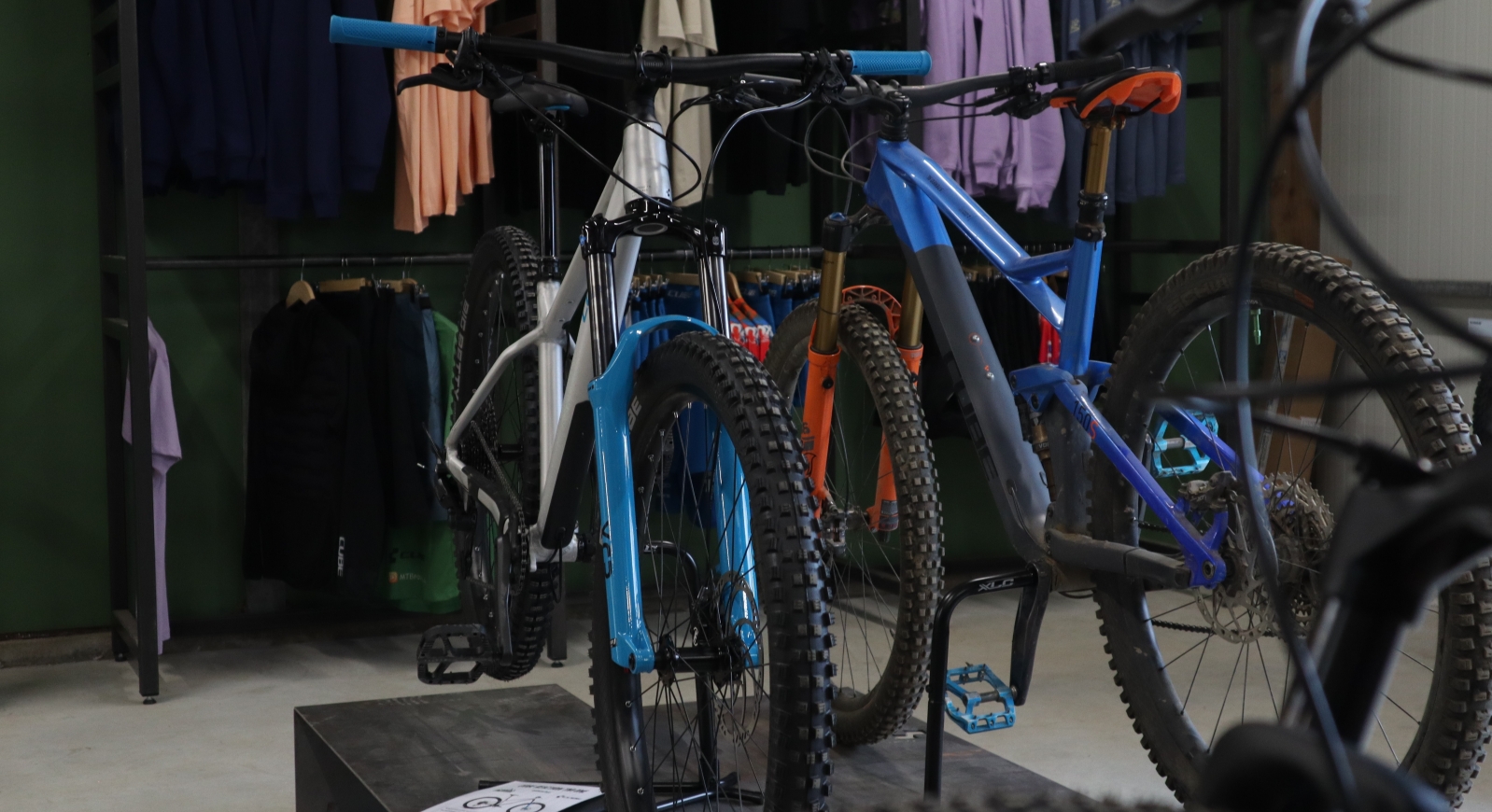
What's the difference, exactly?
A hardtail has suspension only at the front (the fork). The rear wheel is rigidly attached to the frame. That sounds less comfortable, and on rough terrain you'll feel it. But it has real advantages: hardtails are lighter, simpler to maintain, and for many riding styles more than sufficient.
A full-suspension (or "fully") has suspension front and rear. The rear shock absorbs bumps and impacts that the back wheel picks up. That gives you more grip, more comfort and more control on technical or steep terrain.
When should you go for a hardtail?
A hardtail is the smart choice if:
- You're just starting out — less maintenance, lower price tag, and you'll develop better technique because the bike saves you less
- You ride gravel paths or light trails — singletrack without big drops or rock sections is perfectly doable on a hardtail
- You ride cross-country or marathon — on flatter terrain a hardtail is faster and more efficient
- You'd rather put your budget into good components than a second shock and extra maintenance
In our shop, we ride hardtails ourselves. For most riders who walk through our door, a good hardtail is a smarter choice than a cheap fully.
When should you go for a full-suspension?
A fully makes sense if:
- You ride technical or rough terrain — roots, rocks, drops, steep descents — a rear shock pays for itself on every ride
- You do long rides on varied terrain — the extra damping keeps you fresher at the end of the day
- You've been riding for a while and want to upgrade — you notice you're losing the rear wheel in corners or over bumps, and a fully fixes that
- You ride enduro or all-mountain — this is fully territory
What about price?
Expect to pay more for a full-suspension at the same component level. For the price of a good fully, you can get a hardtail with a top-spec drivetrain. That's not a downside of the fully, but it's a trade-off worth making consciously.
Second-hand bikes are worth considering here: we regularly have used CUBE mountain bikes — hardtail and fully — in stock. Sometimes a second-hand fully is a smarter investment than a new hardtail in the same price range.
Buying a good bike is step one. But do you know how often a mountain bike needs maintenance — and what it costs when you wait too long?
Still not sure?
Come by. Tell us how you ride, where you ride and what your budget is — and we'll help you figure out what actually suits you. No sales tricks, no fast talk. Just honest advice.
Indoor Mountainbike — E. Heimansweg 8, 1331 AP Almere 100% MTB-focused: shop, workshop and bike park under one roof.
