



Students design the new concepts for Indoor Mountainbike 2.0!
With 15,000 m² of possibilities, 36 third-year students from Helen Parkhurst Almere tackled the question: what will the future Indoor Mountainbike look like? After exploring by bike, three groups presented their creative designs—from themed routes to a starry night cave and a 360º restaurant. The result: surprising ideas, new perspectives, and an inspiring collaboration that leaves you wanting more.

Landscape, MTB routes and facilities—what does it all involve?
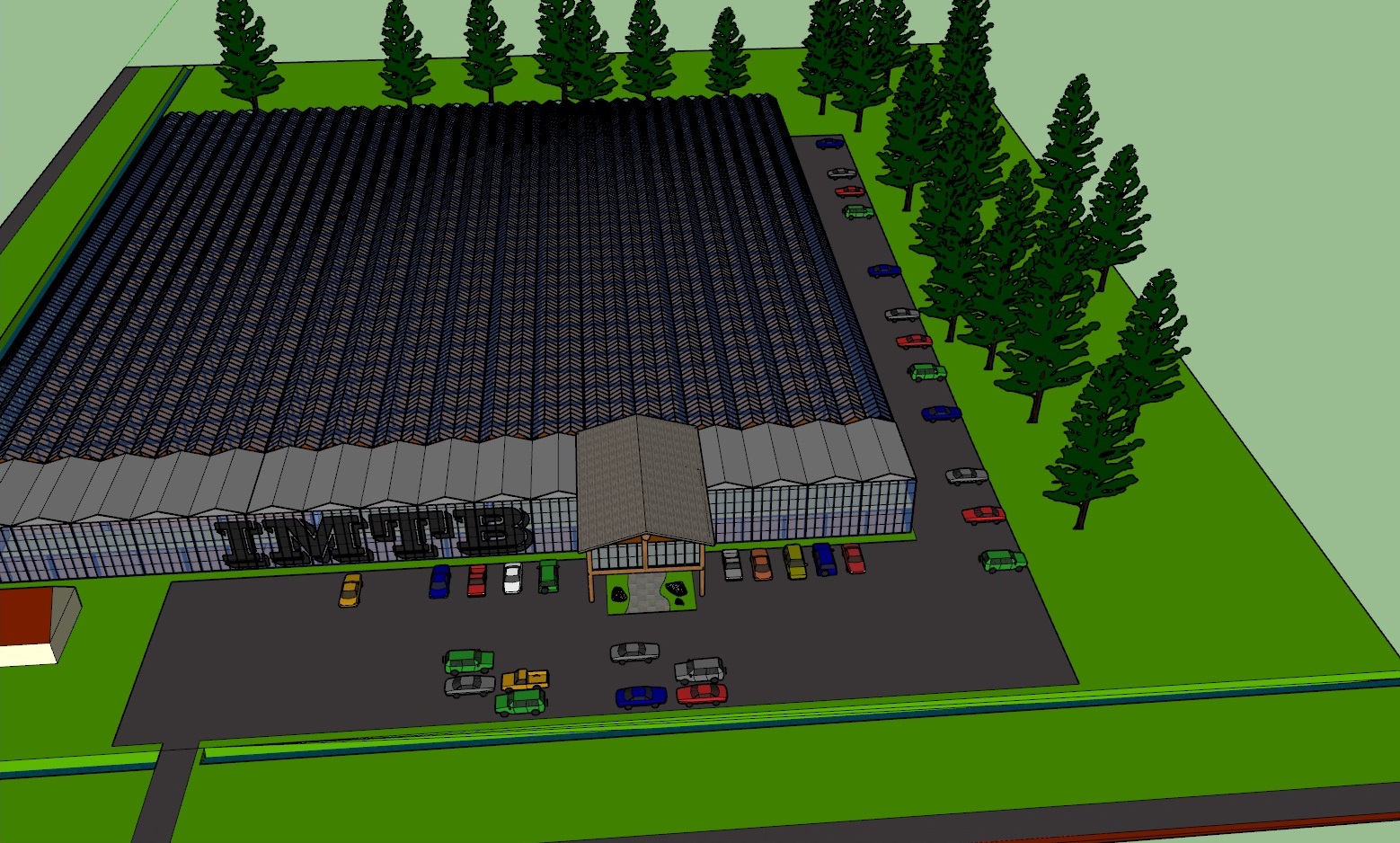
"Indoor Mountainbike 2.0 should become the hotspot for everything related to mountain biking" - Client Indoor Mountainbike
A good project naturally starts with a good exploration, so all 36 students got on their bikes to experience Indoor Mountainbiking. The message: put yourself in the visitor’s shoes and think about everything you need to consider. Soon, 15,000 m² will be available to fill, so there are many details not to be overlooked. The students received an explanation on site about everything involved in designing and building a route, what wishes there are for expansion plans, and what requirements must be met. After seven weeks, it was time to present all the plans.
Presenting new designs
Design group 1:
This group built on the existing concept with their vision and added several new elements.
- A pentagon-shaped restaurant overlooking the route
- Different colored routes for various skill levels
- With existing features such as the wallride, skinny's, and a hilly landscape where steeper descents are also possible.
- Cool new features like a cave with a starry night theme, where you can briefly feel like a real night biker.
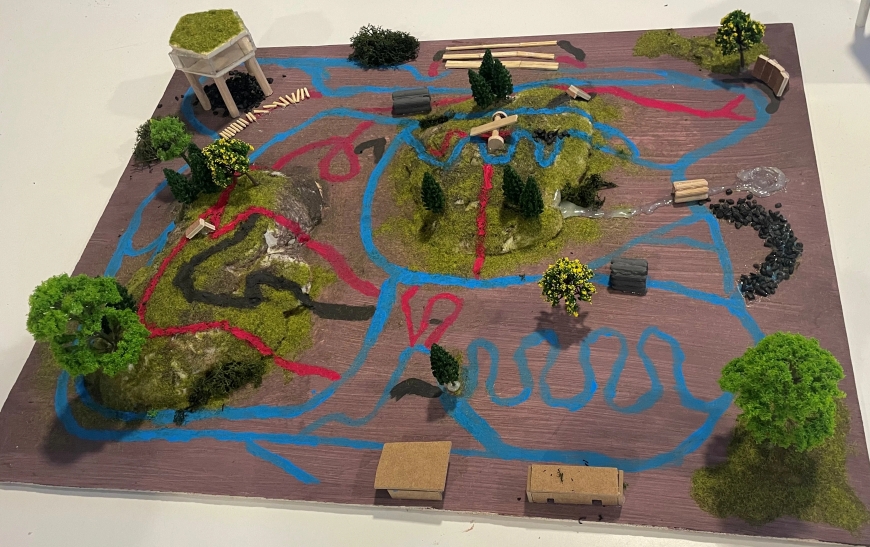
Design group 2:
This group focused on arranging the space as functionally as possible while keeping it atmospheric.
- They designed a 360º restaurant in the center of the space.
- For spectators and pedestrians, an elevated walkway through the hall was created to reach the restaurant. You can also see a red central path, designed specifically for ambulances so they can get close when needed.
- As a fun and challenging detail, an elevated rope bridge was devised to reach the restaurant.
- The route consists of existing features like the wallride and the hanging bridge, with even an upgraded double toilet bowl.
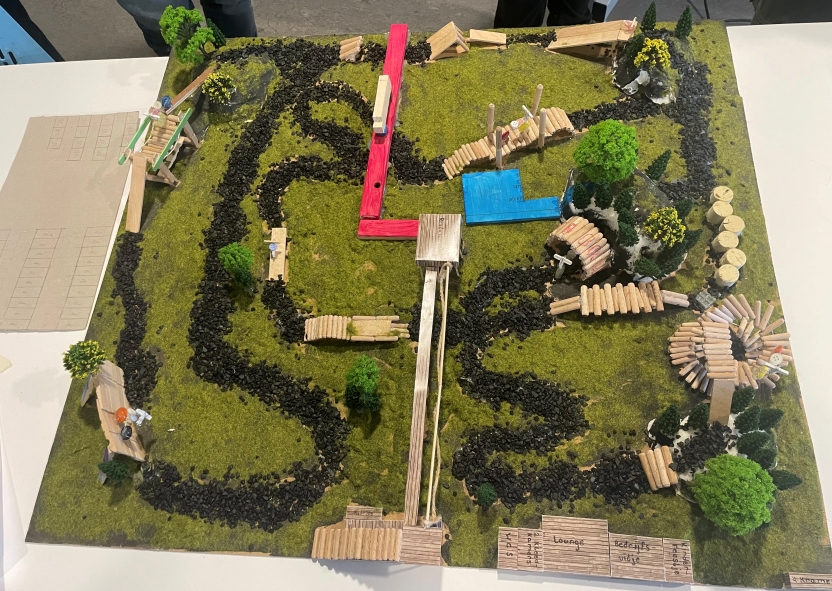
Design group 3:
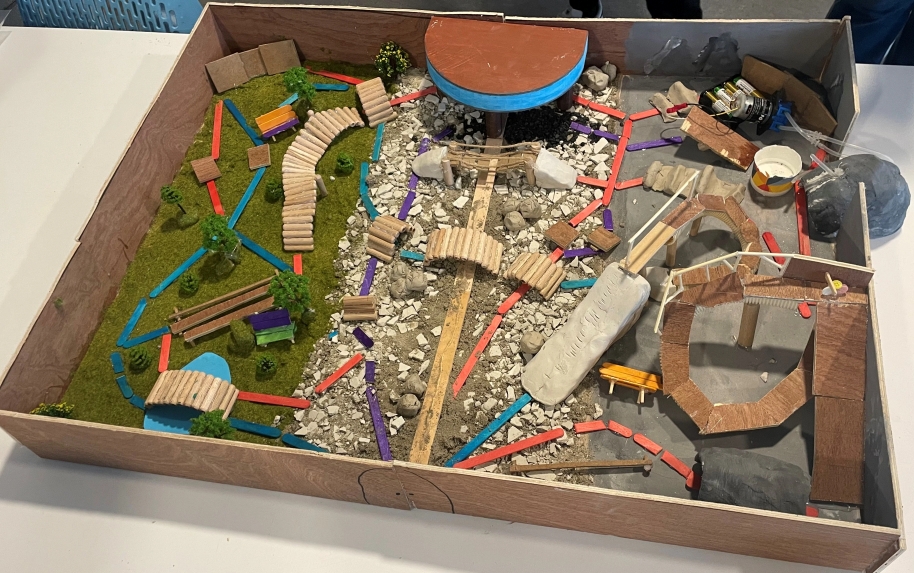
This group proposed dividing the spaces thematically, with the three main themes being forest, rock, and mountain.
- With the theme division, they also planned to link themes to difficulty levels.
- The forest is somewhat flatter and therefore arranged to be easier, suitable for beginners and children.
- Rock has a medium difficulty level. The surface is coarser in texture but still not very hilly, though a bit more exciting.
- In the mountain area, the route becomes overall more difficult, with greater elevation differences and more challenging lines.
- The restaurant is raised and with a 180º view it also overlooks the track. The route runs underneath the restaurant.
Conclusion
How great it is to see so many enthusiastic students being so creative in coming up with and designing track elements! Although there was of course feedback from us as clients and from the teachers, here and there some thoughtfulness and depth were still missing. We primarily look back on an inspiring project assignment for both the students and teachers of Helen Parkhurst and for ourselves.
We sincerely thank Helen Parkhurst – the teachers and students – for this wonderful collaboration!
